
How Brand Impersonation Attacks Tripled in 2025
The numbers are no longer surprising — they're alarming. Brand impersonation attacks increased by more than 300% in 2025 compared to 2023, according to monitoring data from the BRANDEFENSE platform. The drivers are structural, not circumstantial. Understanding them is the only way to build a response program that keeps pace.
What Changed: The Three Structural Shifts
Three developments converged in 2024 and 2025 to make brand impersonation dramatically easier and more profitable for attackers.
First, generative AI dramatically lowered the cost of producing convincing fake brand content. Creating a phishing page that looks pixel-perfect used to require design skill. Today, a threat actor can generate a convincing clone of your login portal, complete with accurate copy and correct brand colors, in under 30 minutes using tools that cost nothing. The quality bar for impersonation attacks has collapsed.
Second, domain registration became cheaper and faster. New TLD availability expanded the surface area for typosquatting significantly — attackers now register variations across .io, .co, .ai, .app, and dozens of country-code extensions simultaneously. The cost of registering 50 variations of a brand domain is under $100. The cost to the brand they're impersonating can run into millions.
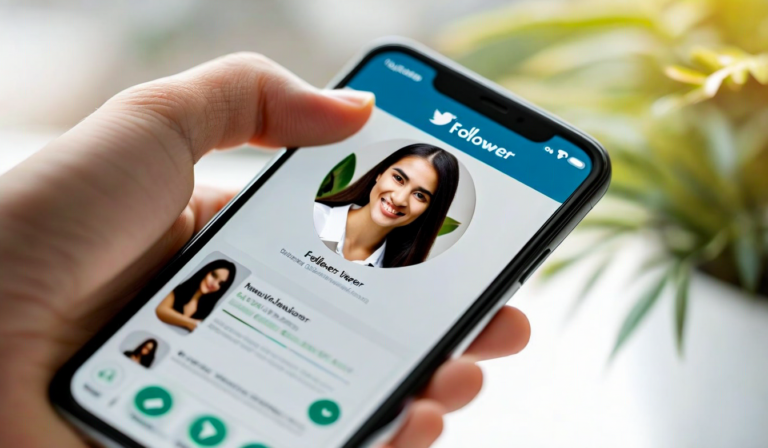
Third, social media platform moderation became less consistent. Enforcement of impersonation policies varied dramatically across platforms in 2024 and 2025, with some platforms taking weeks to act on clear-cut cases. Fraudsters adapted by running campaigns in windows between report and removal.
Which Industries Were Hit Hardest
Financial services companies saw the steepest increase — impersonation attacks against fintech brands more than quadrupled, driven by credential harvesting campaigns targeting customers of mobile banking applications. The reward for a successful phishing credential is direct financial access, which makes the economics of attacking fintech brands particularly attractive.
Healthcare technology was the second most targeted sector. Attackers built fake patient portals, fake appointment booking systems, and fake prescription services — all designed to capture health credentials and payment information. The dual sensitivity of health and payment data made these campaigns especially damaging when they succeeded.
Consumer SaaS brands — productivity tools, HR platforms, project management software — also saw significant increases. These attacks typically targeted employees rather than customers, attempting to capture corporate credentials through fake single sign-on pages impersonating known SaaS brands.
The Long Tail: Brands That Thought They Were Too Small to Target
One of the most significant data points from our 2025 analysis: 62% of the brands that experienced impersonation attacks had fewer than 500 employees. The assumption that impersonation is an enterprise problem is wrong. Smaller brands often have fewer protections in place and their customers may be less security-aware — which makes them attractive targets, not less attractive ones.
The attack pattern against smaller brands is typically more opportunistic. A competitor domain registered with a one-letter variation, a social account cloning the brand's profile to offer fake discount codes, a mobile app listing in a third-party store using stolen assets. None of these require sophisticated infrastructure. They just require that the brand isn't watching.
What the Best-Protected Brands Did Differently
Looking at the brands in our platform that experienced impersonation attempts but contained them quickly, several patterns stand out. They were monitoring continuously, not periodically — threats were flagged within hours of appearing, not days. They had pre-approved takedown workflows that didn't require legal review for every standard case, which meant response times were measured in hours rather than weeks. And they were monitoring channels where attacks were actually happening — dark web forums, app stores, domain registries — not just the obvious social platforms.
The brands that fared worst were those that treated brand protection as a reactive function. They found out about impersonation attacks from customers who had already been defrauded, from press coverage, or from manual Googling. By the time they mobilized a response, the attack window had already done its damage.
What 2026 Looks Like
The structural conditions that drove the 2025 surge haven't changed. AI-assisted attack tooling is more capable than it was a year ago. Domain registration costs are flat. Social platform moderation remains uneven. The attack volume in 2026 is likely to continue increasing, and the quality of individual attacks will improve as attackers apply AI to personalization at scale.
The appropriate response is not panic — it's infrastructure. Brand protection needs to be treated as a continuous operational function, not a project that gets resourced reactively after an incident. The gap between brands that have built that function and those that haven't is widening, and 2025 is when the data made that undeniable.
Conclusion
Brand impersonation tripled in 2025 because the economics shifted decisively in favor of attackers. Cheap tools, broad distribution channels, and inconsistent enforcement created conditions where volume attacks became rational. The defense requires matching that with continuous monitoring, fast response infrastructure, and a security posture that treats brand as an asset worth protecting — not just a marketing concern. The data from 2025 is a mandate, not just a trend report.
See how BRANDEFENSE detects and responds to brand impersonation attacks. Request a demo and we'll walk through your current exposure in real time.